Evelyn Howard
The Mysterious Affair at StylesEvelyn Howard, known as Evie and Miss Howard, is Emily Inglethorp’s companion, confidante, and self-appointed guardian. Her forceful warnings about Alfred Inglethorp appear to arise from loyalty and suspicion; Hercule Poirot eventually reveals that the hostility is a mask. Evelyn and Alfred are cousins, lovers, and co-conspirators whose carefully divided roles help conceal their plan to obtain Emily’s money through murder.
Identity and Place in the Household
John Cavendish describes Evelyn as Emily’s factotum and companion, a practical “Jack of all trades” who has served her across many kinds of household and charitable work. He presents her as a loyal friend and “a great sport,” while noting that she is neither young nor conventionally beautiful. This first account establishes her as an energetic, familiar presence in Emily’s life rather than a distant visitor.
Evelyn’s attachment to Emily is also expressed as vigilance over the household’s finances. When she prepares to leave, she warns Arthur Hastings that Emily is surrounded by people who are short of money and trying to obtain it from her. Evelyn says she has protected Emily as much as she could and fears that others will take advantage of her in her absence. The warning is sincere in its concern for Emily, but its apparent explanation of Evelyn’s loyalties is incomplete: the person she condemns most emphatically is her own accomplice.
Warnings, Departure, and Return
Evelyn directly confronts Emily about Alfred. She argues that he is substantially younger than Emily and married her for her money, and she urges Emily to consider his attention to Mrs. Raikes. She also tells Emily that Alfred might kill her. Emily reacts angrily, but Evelyn refuses to soften her warning; her readiness to speak bluntly reinforces her reputation as a protective friend who will risk a quarrel rather than keep quiet.
Before leaving Styles Court, Evelyn asks Hastings to look after Emily. She describes the household as full of people seeking money and says that Emily will be vulnerable without her protection. The warning gives the reader a strong early impression of Evelyn as an ally. Poirot later reinterprets that impression: Evelyn’s exaggerated denunciations of Alfred are part of the misdirection surrounding their shared crime, not proof that she is an innocent opponent of his interests.
After Emily’s death, Evelyn returns as soon as she receives the telegram. She has just come off night duty and hires a car to reach the house quickly. Hastings feels ashamed that he dismissed her earlier warning, and Evelyn greets him without reproach. Her eyes are sad and red from crying, but she retains her familiar gruff manner. Her return revives the image of a bereaved friend and underscores how effectively her genuine familiarity with Emily can support a misleading account of her role.
The Murder Plot and Its Concealment
Poirot identifies the gap between Evelyn’s professed hatred of Alfred and her underlying allegiance to him. When he asks whether she still believes Alfred poisoned Emily, he presses beyond what she consciously wants to believe: her instinct, he says, points to another name. Evelyn reacts with alarm when he approaches that conclusion. The exchange exposes the tension between her campaign against Alfred and her suppressed knowledge of who was really responsible.
Poirot explains that Evelyn could not have committed the murder alone, but that the evidence against her as a solitary killer did not rule out complicity. She and Alfred were cousins, and their intimacy predated Alfred’s arrival at Styles. According to Poirot’s reconstruction, they planned for Alfred to marry the wealthy Emily, induce her to make a will in his favor, and then secure her money through a carefully devised crime. They expected to leave England and live together on Emily’s fortune.
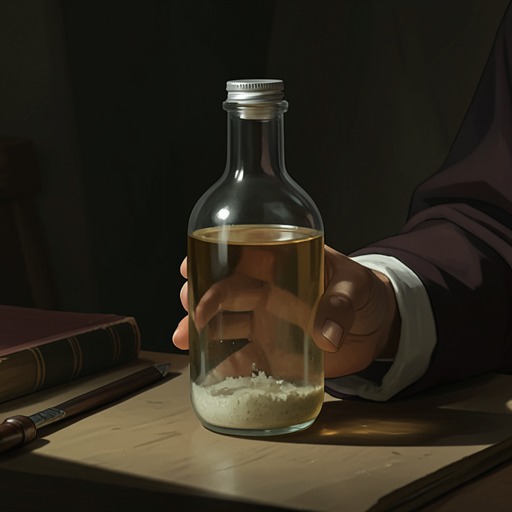
Evelyn’s part in the plot included making suspicion point in a false direction. Alfred was to appear culpable, and his conspicuous beard and the circumstances surrounding the supposed purchase of poison helped make him a target. Poirot describes Evelyn as quietly preparing for another outcome while public suspicion focused on Alfred. She brought compromising items from Middlingham, hid strychnine and glasses in John Cavendish’s room, and placed the beard in the attic, where they could later be discovered and implicate other household members. Her practical familiarity with the house and its movements helped make concealment possible.
The concealed letter to Evelyn provides a decisive link between the pair. Reassembled from three strips of paper, it is addressed to her and refers to a killing postponed from the previous night, the prospect of the old woman’s death, and Evelyn’s suggestion involving bromides. Its timing reflects the change in the plan: Emily had not taken her medicine when expected, so the fatal dose came a day later than intended. Evelyn’s receipt of the letter and its contents establish that she was not merely suspicious of Alfred’s conduct but involved in planning the crime with him.
Money, Law, and Narrative Reversal
The household’s will and inheritance arrangements clarify the financial stakes behind the plot. Emily’s will from the previous August left her entire fortune to John Cavendish after minor legacies. John explains that his father’s will had already provided him with the property, while Lawrence Cavendish would receive a substantial sum when Emily died; Emily’s gift to John was intended to help him maintain Styles. Poirot points out that Emily’s remarriage automatically revoked that earlier will under English law. The legal change made a new will important to any scheme aimed at inheritance, while also complicating the appearance that Alfred’s motives were obvious.
The prosecution later presents John as the murderer, alleging financial distress, an affair with Mrs. Raikes, a quarrel with Emily, and an attempt to buy strychnine in disguise. Sir Ernest Heavywether’s account contests that case: John knew the earlier will in Alfred’s favor had been revoked by Emily’s remarriage, and the evidence concerning the destruction of the new will might reveal another explanation. These courtroom claims show how the crime’s financial and legal circumstances can be arranged to support competing accusations. Evelyn’s role in helping plant evidence makes the false case against John part of the larger effort to divert attention from the actual conspirators.
Evelyn’s characterization thus turns on the difference between a warning’s apparent meaning and its concealed purpose. Her devotion to Emily seems to make her a reliable source about Alfred; her knowledge of his character appears confirmed by the murder; and her return seems to affirm her grief. Yet the final explanation converts these same appearances into elements of concealment. She is both Emily’s familiar companion and a participant in the scheme against her, a contradiction that makes her warnings one of the mystery’s most consequential deceptions.